SFFA v. Harvard: what the Supreme Court decided about race in admissions, and what's still allowed
In 2023 the Supreme Court ended race-conscious admissions. Walk through 45 years of cases, test yourself on what colleges can still consider, and see what it means for your essays.
The question we keep seeing
“The Supreme Court ended affirmative action. Can I still write about my race or background in my college essays?”
The short answer
- On June 29, 2023, in Students for Fair Admissions v. Harvard and its companion case against UNC, the Supreme Court held that both universities' race-conscious admissions programs were unlawful.
- Colleges can no longer give an applicant a benefit for their race itself. They can still consider how race affected an applicant's life, as long as the benefit is tied to that person's character or abilities.
- For applicants, that means essays about your experiences, including experiences with race, still count. Write about what you did, learned or built, not just who you are.
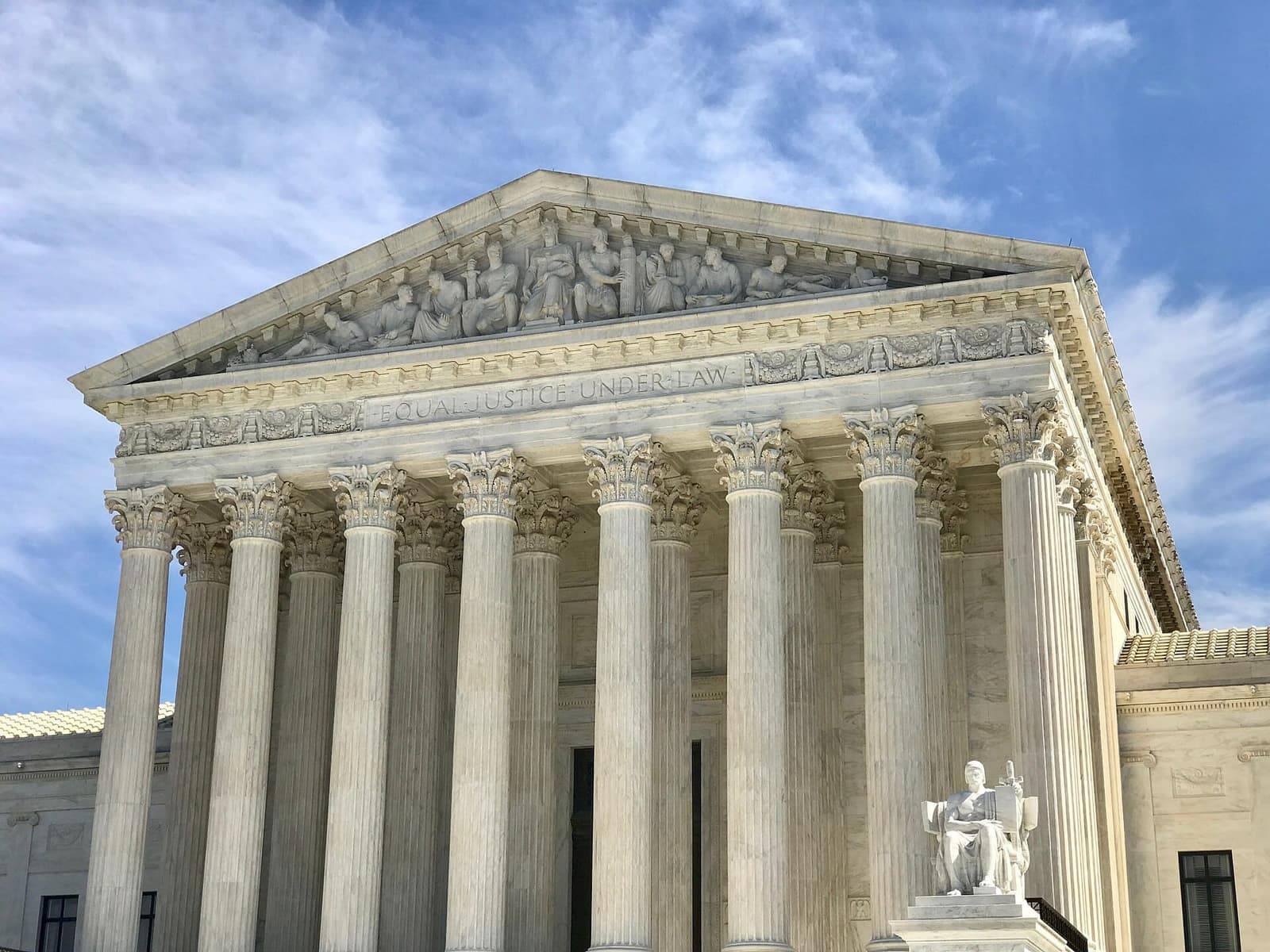
For 45 years, the Supreme Court allowed selective colleges to consider an applicant's race as one factor among many. In 2023 it stopped. The decision in Students for Fair Admissions v. President and Fellows of Harvard College, decided together with a case against the University of North Carolina, changed how every selective college reads an application.Footnote 1Source 1Students for Fair Admissions, Inc. v. President and Fellows of Harvard College, 600 U.S. 181 (2023), slip opinion (Supreme Court of the United States)The majority opinion (Roberts, C.J.), concurrences and dissents. The passage on applicants' discussion of race is at slip op. 39–40; footnote 4 on military academies is at slip op. 22.supremecourt.gov Here's what the Court decided, what led up to it, and what it means for the essays you're writing now.
How we got here
The story starts in 1978. In Regents of the University of California v. Bakke, the medical school at UC Davis had reserved 16 of its 100 seats for minority applicants. The Court struck that set-aside down. But Justice Powell's controlling opinion said a university could still consider race as one factor, to gain the educational benefits of a diverse class.Footnote 2Source 2Regents of the University of California v. Bakke, 438 U.S. 265 (1978) (Legal Information Institute, Cornell Law School)Struck down UC Davis's 16-seat set-aside; Justice Powell's opinion allowed race as one factor in pursuit of diversity.law.cornell.edu That reasoning became the foundation for race-conscious admissions.
In 2003 the Court drew the line more precisely. It upheld Michigan Law School's holistic, individualized review in Grutter v. Bollinger. On the same day, in Gratz v. Bollinger, it struck down Michigan's undergraduate system, which automatically awarded 20 points, on a scale where 100 guaranteed admission, to applicants from underrepresented groups.Footnote 3Source 3Grutter v. Bollinger, 539 U.S. 306 (2003) (Legal Information Institute, Cornell Law School)Upheld Michigan Law School's holistic review; source of the '25 years from now' expectation.law.cornell.eduFootnote 4Source 4Gratz v. Bollinger, 539 U.S. 244 (2003) (Legal Information Institute, Cornell Law School)Struck down Michigan's automatic 20-point bonus in undergraduate admissions.law.cornell.edu The Grutter majority added a sentence that would matter 20 years later: "We expect that 25 years from now, the use of racial preferences will no longer be necessary to further the interest approved today."Footnote 3Source 3Grutter v. Bollinger, 539 U.S. 306 (2003) (Legal Information Institute, Cornell Law School)Upheld Michigan Law School's holistic review; source of the '25 years from now' expectation.law.cornell.edu
Two challenges to the University of Texas followed. In 2013 the Court sent the case back and told lower courts to look harder at whether race-neutral alternatives would work.Footnote 5Source 5Fisher v. University of Texas at Austin, 570 U.S. 297 (2013) (Legal Information Institute, Cornell Law School)Remanded for stricter review of whether race-neutral alternatives would suffice.law.cornell.edu In 2016 it upheld UT's program 4–3.Footnote 6Source 6Fisher v. University of Texas at Austin, 579 U.S. 365 (2016) (Legal Information Institute, Cornell Law School)Upheld UT Austin's program 4–3, the last time the Court approved race-conscious admissions.law.cornell.edu In between, it held in 2014 that states could ban race-conscious admissions at their own public universities, as Michigan's voters had.Footnote 7Source 7Schuette v. Coalition to Defend Affirmative Action, 572 U.S. 291 (2014) (Legal Information Institute, Cornell Law School)Upheld Michigan voters' ban on racial preferences in public university admissions.law.cornell.edu
From Bakke to SFFA, and after
Tap a year to see what changed.
- 1978
- 2003
- 2003
- 2013
- 2014
- 2016
- 2023
- 2023
- 2025
- 2025
SFFA v. Harvard and SFFA v. UNC
Students for Fair Admissions challenged race-conscious admissions at Harvard, a private college bound by Title VI, and UNC, a public university bound by the Equal Protection Clause. Decided June 29, 2023.
What it left behind: Both programs were held unlawful. Universities may no longer give a benefit for an applicant's race itself. They may still consider how race affected an applicant's life, tied to that person's character or abilities.
Source: SFFA v. Harvard, 600 U.S. 181 (2023)What the Court decided in 2023
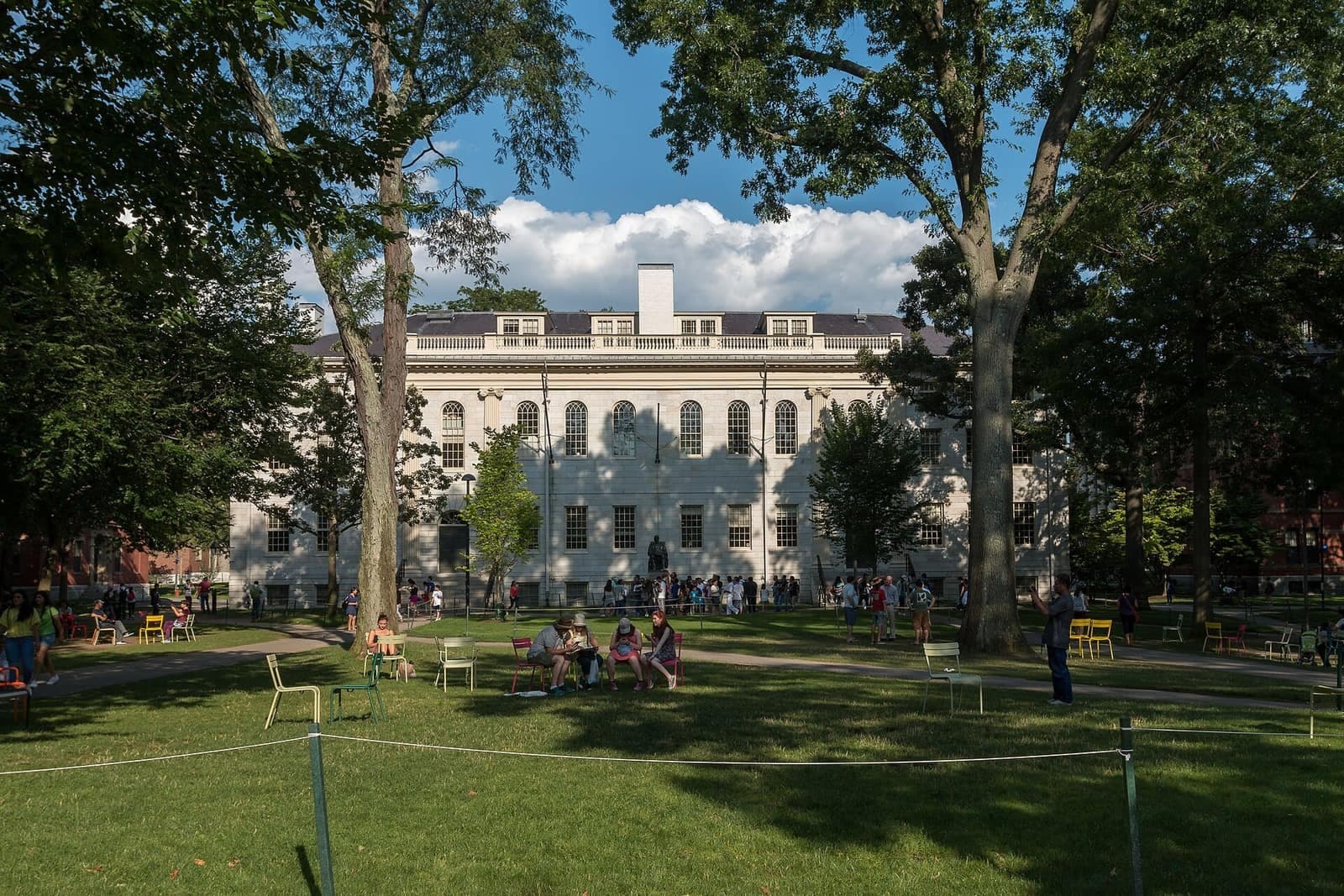
Students for Fair Admissions sued two very different schools. Harvard, a private college that receives federal funds, is bound by Title VI of the Civil Rights Act of 1964. UNC, a public university, is bound by the Equal Protection Clause of the Fourteenth Amendment.Footnote 1Source 1Students for Fair Admissions, Inc. v. President and Fellows of Harvard College, 600 U.S. 181 (2023), slip opinion (Supreme Court of the United States)The majority opinion (Roberts, C.J.), concurrences and dissents. The passage on applicants' discussion of race is at slip op. 39–40; footnote 4 on military academies is at slip op. 22.supremecourt.gov The opinion notes the stakes: Harvard receives more than 60,000 applications for a class of about 1,600, and UNC about 43,500 for about 4,200.Footnote 1Source 1Students for Fair Admissions, Inc. v. President and Fellows of Harvard College, 600 U.S. 181 (2023), slip opinion (Supreme Court of the United States)The majority opinion (Roberts, C.J.), concurrences and dissents. The passage on applicants' discussion of race is at slip op. 39–40; footnote 4 on military academies is at slip op. 22.supremecourt.gov
Chief Justice Roberts wrote for a six-justice majority. The vote was 6–3 in the UNC case and 6–2 in the Harvard case, which Justice Jackson did not take part in.Footnote 1Source 1Students for Fair Admissions, Inc. v. President and Fellows of Harvard College, 600 U.S. 181 (2023), slip opinion (Supreme Court of the United States)The majority opinion (Roberts, C.J.), concurrences and dissents. The passage on applicants' discussion of race is at slip op. 39–40; footnote 4 on military academies is at slip op. 22.supremecourt.gov The majority held that both programs failed for four reasons:Footnote 1Source 1Students for Fair Admissions, Inc. v. President and Fellows of Harvard College, 600 U.S. 181 (2023), slip opinion (Supreme Court of the United States)The majority opinion (Roberts, C.J.), concurrences and dissents. The passage on applicants' discussion of race is at slip op. 39–40; footnote 4 on military academies is at slip op. 22.supremecourt.gov
- No measurable objectives. Goals such as training future leaders or producing new knowledge were, in the Court's view, too vague for a court to review.
- Race used as a negative. Admissions are zero-sum, so a benefit to some applicants is a disadvantage to others.
- Racial stereotyping. Treating race as a proxy for a particular point of view is what the Equal Protection Clause forbids.
- No end point. Neither school could say when it would stop. The Court read Grutter's 25 years as an expectation, not a guarantee that preferences could last until 2028.
The dissent
Justice Sotomayor, joined by Justice Kagan and, in the UNC case, Justice Jackson, wrote that the decision "rolls back decades of precedent and momentous progress." She argued that in a society where race continues to matter, ignoring it entrenches inequality rather than ending it.Footnote 1Source 1Students for Fair Admissions, Inc. v. President and Fellows of Harvard College, 600 U.S. 181 (2023), slip opinion (Supreme Court of the United States)The majority opinion (Roberts, C.J.), concurrences and dissents. The passage on applicants' discussion of race is at slip op. 39–40; footnote 4 on military academies is at slip op. 22.supremecourt.gov Justice Jackson wrote a separate dissent in the UNC case. On the other side, Justice Thomas's concurrence defended a color-blind reading of the Constitution, quoting Justice Harlan's dissent in Plessy v. Ferguson.Footnote 1Source 1Students for Fair Admissions, Inc. v. President and Fellows of Harvard College, 600 U.S. 181 (2023), slip opinion (Supreme Court of the United States)The majority opinion (Roberts, C.J.), concurrences and dissents. The passage on applicants' discussion of race is at slip op. 39–40; footnote 4 on military academies is at slip op. 22.supremecourt.gov The disagreement is about what equal protection requires: treating every applicant the same regardless of race, or taking race into account to address inequality.
What colleges can still consider
The most important passage for applicants is near the end of the majority opinion. The Court wrote that "nothing in this opinion should be construed as prohibiting universities from considering an applicant's discussion of how race affected his or her life, be it through discrimination, inspiration, or otherwise."Footnote 1Source 1Students for Fair Admissions, Inc. v. President and Fellows of Harvard College, 600 U.S. 181 (2023), slip opinion (Supreme Court of the United States)The majority opinion (Roberts, C.J.), concurrences and dissents. The passage on applicants' discussion of race is at slip op. 39–40; footnote 4 on military academies is at slip op. 22.supremecourt.gov It then set the limit: colleges can't use essays to rebuild the system it had just struck down. A benefit to a student who overcame discrimination must be tied to that student's courage and determination, and "the student must be treated based on his or her experiences as an individual—not on the basis of race."Footnote 1Source 1Students for Fair Admissions, Inc. v. President and Fellows of Harvard College, 600 U.S. 181 (2023), slip opinion (Supreme Court of the United States)The majority opinion (Roberts, C.J.), concurrences and dissents. The passage on applicants' discussion of race is at slip op. 39–40; footnote 4 on military academies is at slip op. 22.supremecourt.gov
Try sorting real-world practices with that line in mind.
After SFFA, can a college do this?
9 scenariosPick an answer for each one, then read the reasoning.
1.An application reader gives a plus to every applicant who checks a particular race box.
2.An applicant writes about facing discrimination at school and how it built their determination. The reader credits that determination.
3.An applicant writes about how her family's culture led her to start a heritage-language program at her library. The reader credits her leadership.
4.A reader skims essays only to work out each applicant's race, then gives a plus based on it.
5.Near the end of the cycle, the committee checks the admitted class's racial makeup and adjusts decisions to prevent a drop from last year.
6.A college gives weight to applicants from low-income families or under-resourced high schools.
7.A college sends recruiters to high schools in rural and low-income areas it rarely visited before.
8.A U.S. military academy considers race in admissions.
9.A private college gives a preference to children of alumni.
A plain-English reading of the Supreme Court's opinion and later federal guidance, not legal advice. Courts and agencies are still working out how far the ruling reaches.
What changed after the ruling
- Federal guidance. In August 2023, the Departments of Education and Justice told colleges they could still weigh an applicant's individual experiences, socioeconomic status and adversity, and could pursue outreach using race-neutral criteria.Footnote 8Source 8Questions and Answers Regarding the Supreme Court's Decision in Students for Fair Admissions, Aug. 14, 2023 (U.S. Departments of Education and Justice)Post-decision guidance on what colleges could still do. The Department has since rescinded it and keeps it online for historical purposes.ed.gov That guidance has since been rescinded. A stricter February 2025 letter from the Department of Education was vacated by a federal court in August 2025.Footnote 9Source 9American Federation of Teachers v. U.S. Department of Education, No. SAG-25-628 (D. Md. Aug. 14, 2025), memorandum opinionVacated the Department of Education's February 14, 2025 Dear Colleague letter.storage.courtlistener.com
- The Common App. Its race and ethnicity question stayed optional, and since August 2023, colleges can choose to hide applicants' answers from the application file their readers see.Footnote 10Source 10What to expect from Common App after the Supreme Court decision on race-conscious admissions (Common App)The race and ethnicity question remains optional; from August 1, 2023, colleges can suppress responses from the application PDF.commonapp.org
- Enrollment. Some colleges published the results. MIT reported that about 16% of its first class admitted after the ruling identified as Black, Hispanic, and/or Native American or Pacific Islander, compared with about 25% in recent years.Footnote 11Source 11Q&A: Undergraduate admissions in the wake of the 2023 Supreme Court ruling (MIT News, Massachusetts Institute of Technology)About 16% of the Class of 2028 identified as Black, Hispanic, and/or Native American or Pacific Islander, versus about 25% in recent years.news.mit.edu
- More data. A 2025 presidential memorandum led to a new federal survey that asks four-year colleges to report applicants, admits and enrollees by race and sex, so the effects can be tracked.Footnote 12Source 12Ensuring Transparency in Higher Education Admissions, presidential memorandum, Aug. 7, 2025 (The White House)Directed the Secretary of Education to expand admissions data reporting.whitehouse.govFootnote 13Source 13Admissions and Consumer Transparency Supplement (ACTS), IPEDS survey materials (National Center for Education Statistics)The resulting federal survey: applicants, admits and enrollees by race and sex at four-year institutions.surveys.nces.ed.gov
Nothing here is legal advice, and the law is still developing. Courts and federal agencies are still working out how far the ruling reaches beyond admissions. For your application, the practical rule is simple: tell the reader what you've done and what you've learned, in your own words.
Try it in Katalyna
Writing studio
Draft and get feedback on essays that show what you did, not just who you are.
Frequently asked
On June 29, 2023, it held that Harvard's and UNC's race-conscious admissions programs were unlawful. Harvard's program violated Title VI, and UNC's violated the Equal Protection Clause. Colleges can no longer give a benefit for an applicant's race itself.
Yes. The Court said nothing in its opinion prohibits colleges from considering how race affected an applicant's life. The benefit has to be tied to the applicant's individual character or abilities, such as resilience, leadership or what they'll contribute, not to race itself.
Yes, to private colleges that accept federal funds, which is nearly all of them, through Title VI. Public universities are bound through the Equal Protection Clause.
No. The Court said in footnote 4 that its opinion did not address military academies, because of the potentially distinct interests they may present.
No. The case was about race, and the opinion doesn't rule on legacy preferences. Some colleges have dropped them on their own, and some states regulate them.